SnackIt Store
Midnight cravings. A hostel hustle. Eventually, a website.
A hostel snack operation that outgrew WhatsApp. I built a storefront to organise products, simplify ordering, and manage the work behind the counter.
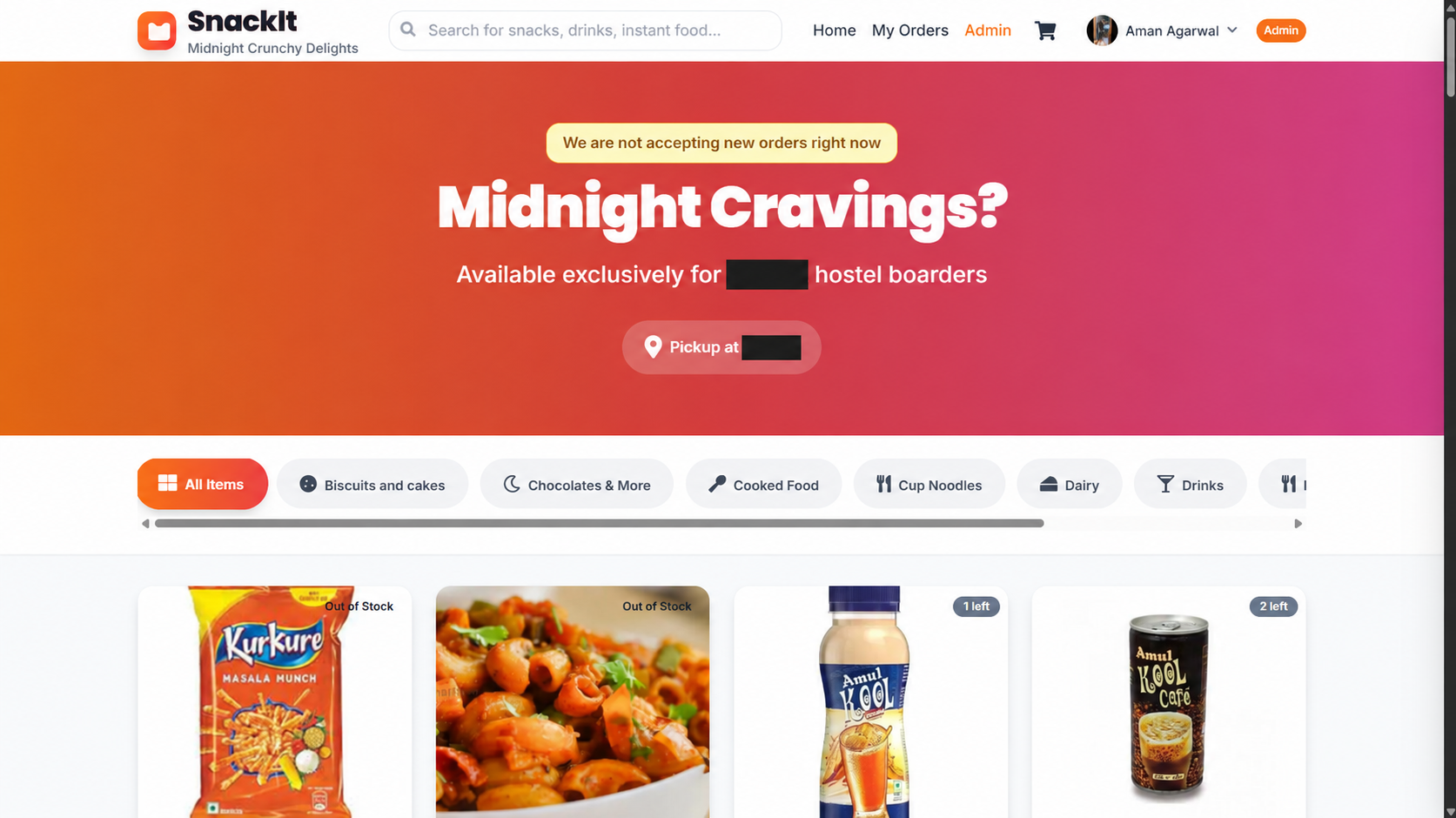
Deployed · ordering currently paused
It started with a craving.
When we moved to a hostel on the remote side of campus, getting snacks and everyday essentials wasn’t convenient. Nearby shops were practically nonexistent, and hostel snack supplies were always a mess.
I started ordering products in bulk through Instamart to get better discounts and reselling them to fellow students at MRP. Students got convenient access to snacks, I made some money, and the operation became my midnight side hustle.
Then WhatsApp became the bottleneck.
Orders were being managed informally through WhatsApp. Keeping products, availability, and requests organised wasn’t ideal. Around my fifth semester, I built SnackIt Store to bring structure to that operation.
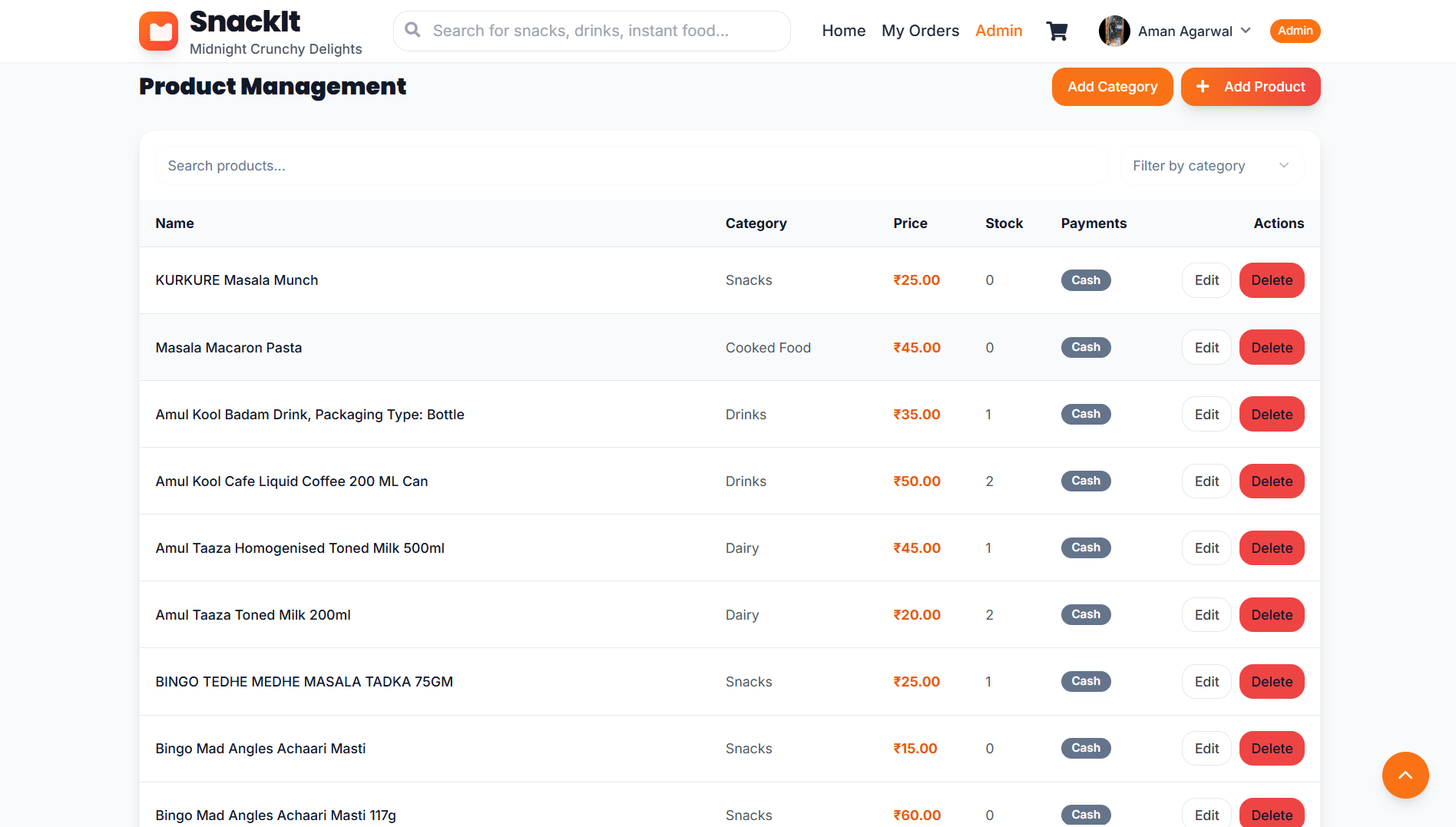
The website brings the storefront and the operational side together: product browsing, a cart, ordering, and an admin area for products, orders, and store settings.
A cart is only as good as its data.
A product’s price or availability can change while someone is browsing. The order endpoint checks the current product data and stock, checks which payment methods are allowed, and calculates the total on the server before creating the order.
That keeps the order from depending on the price previously stored in the browser. It was a practical lesson in building software around a changing, real-world operation.
What I took away.
SnackIt connected two things I enjoy: understanding demand and making a useful product. The business came first; the website followed a problem I actually had.
The storefront remains deployed, with ordering currently paused. This case study focuses on the product and the decisions behind it.
See the product screenshots